
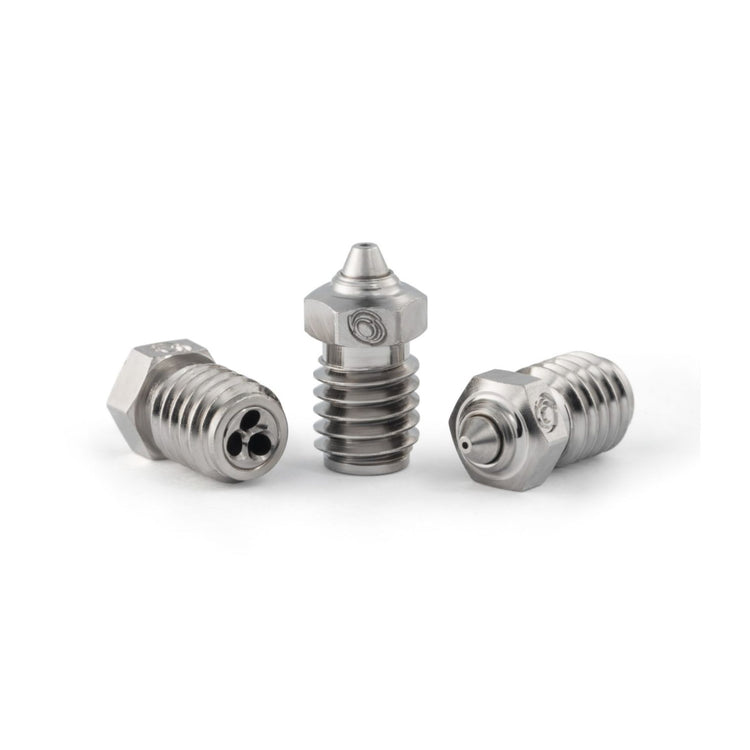
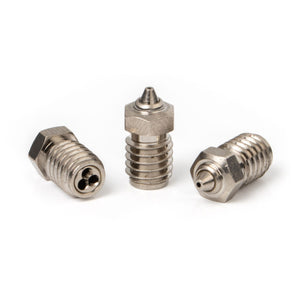
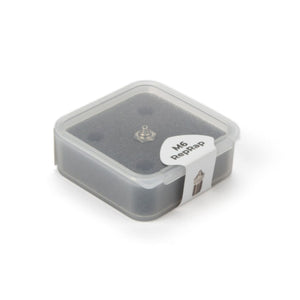
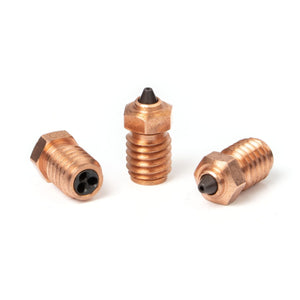
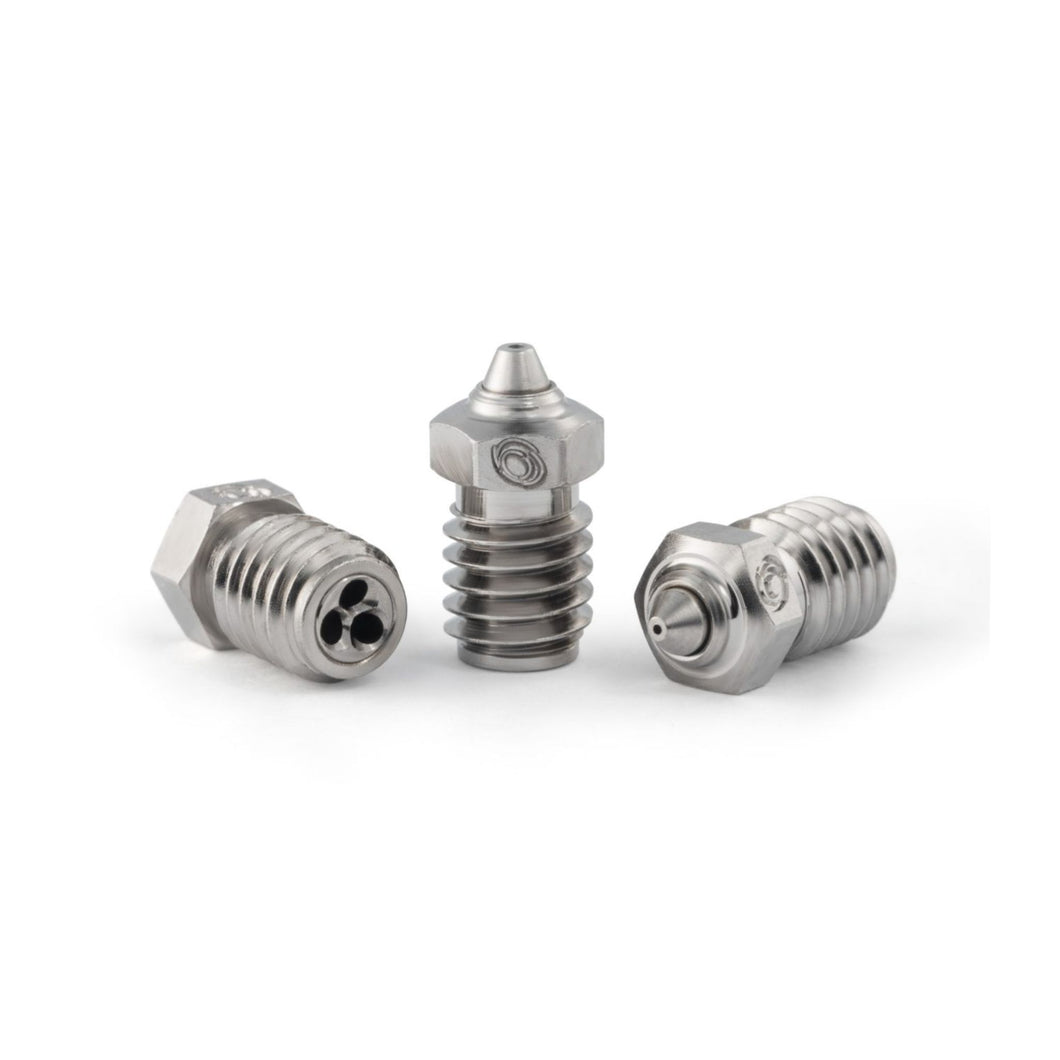
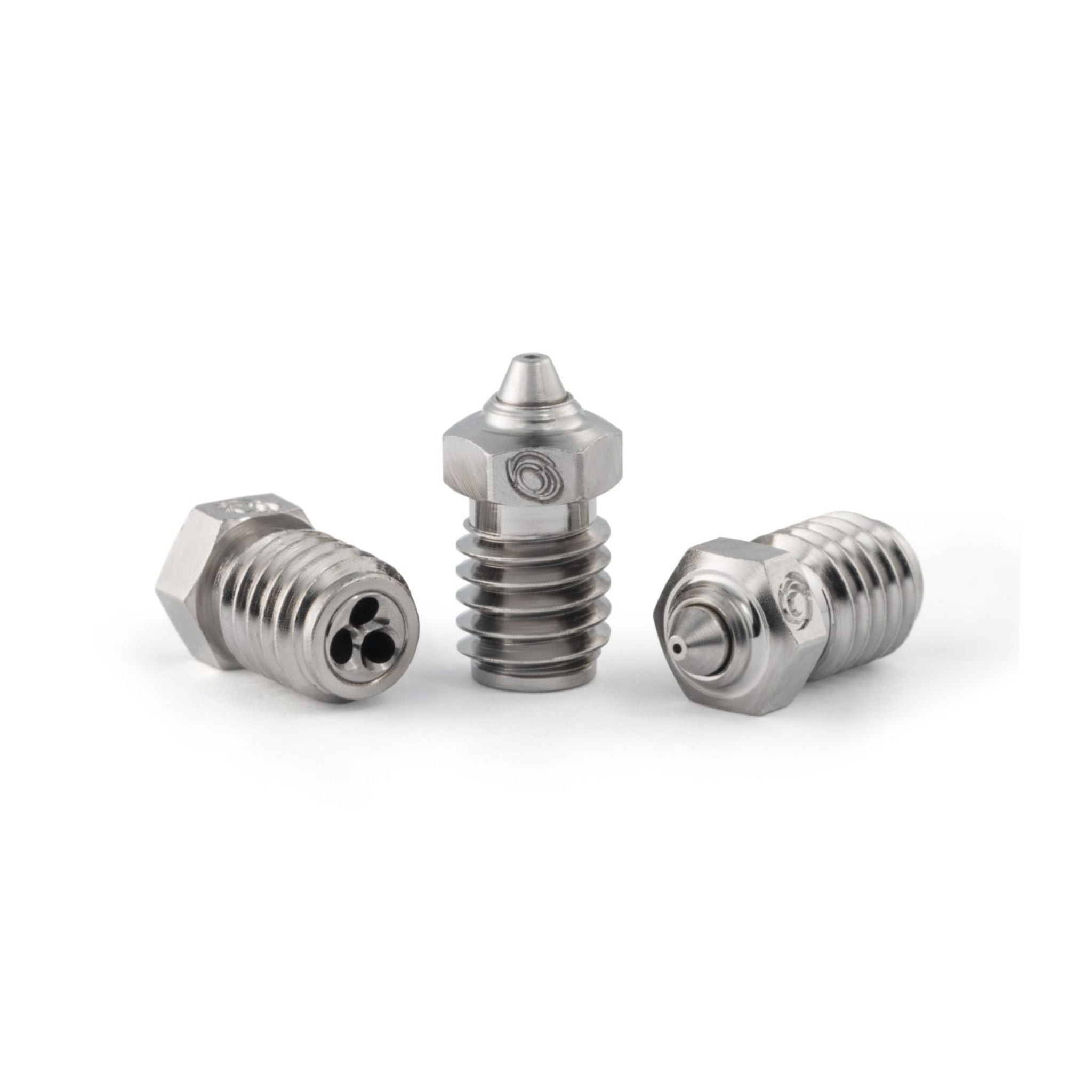
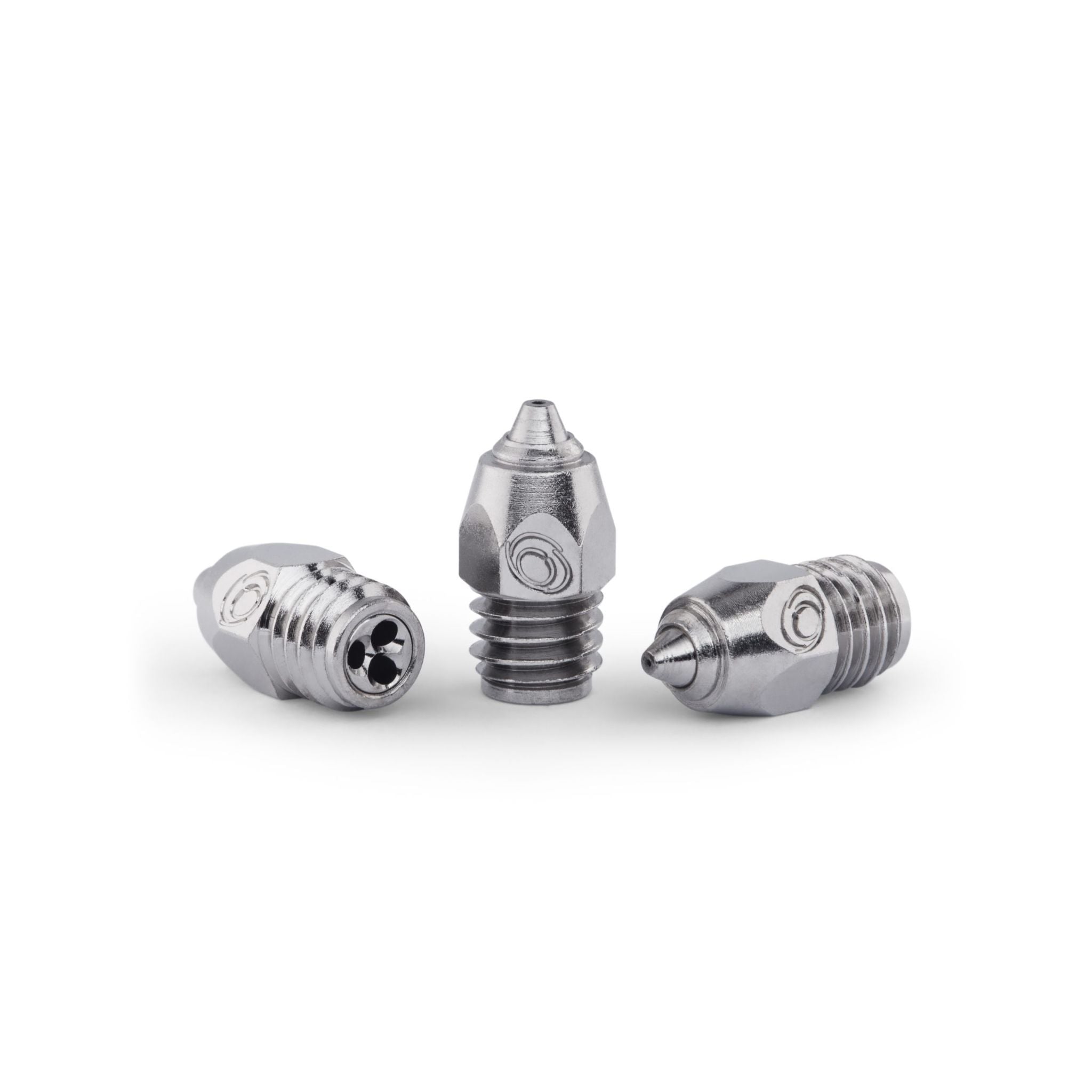
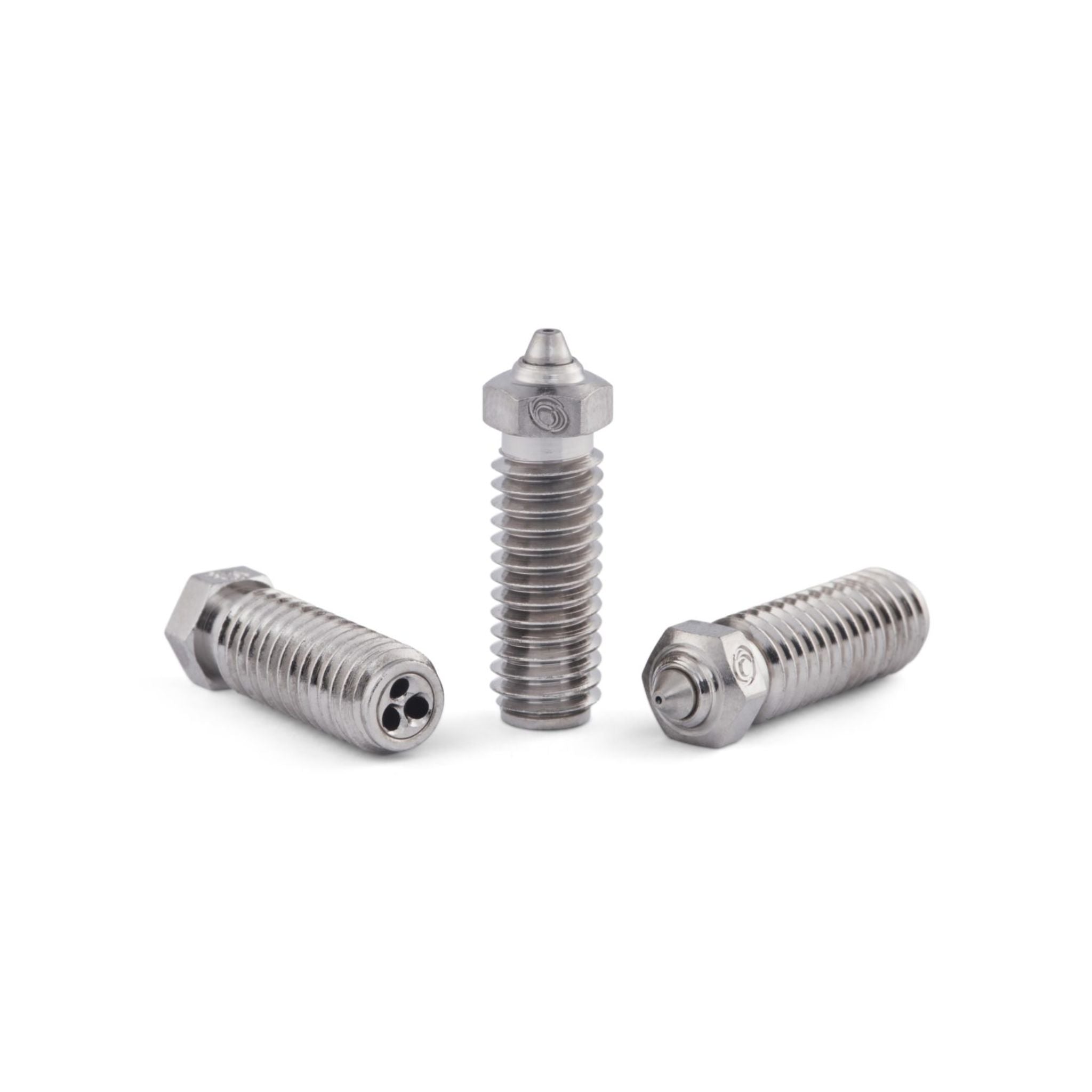
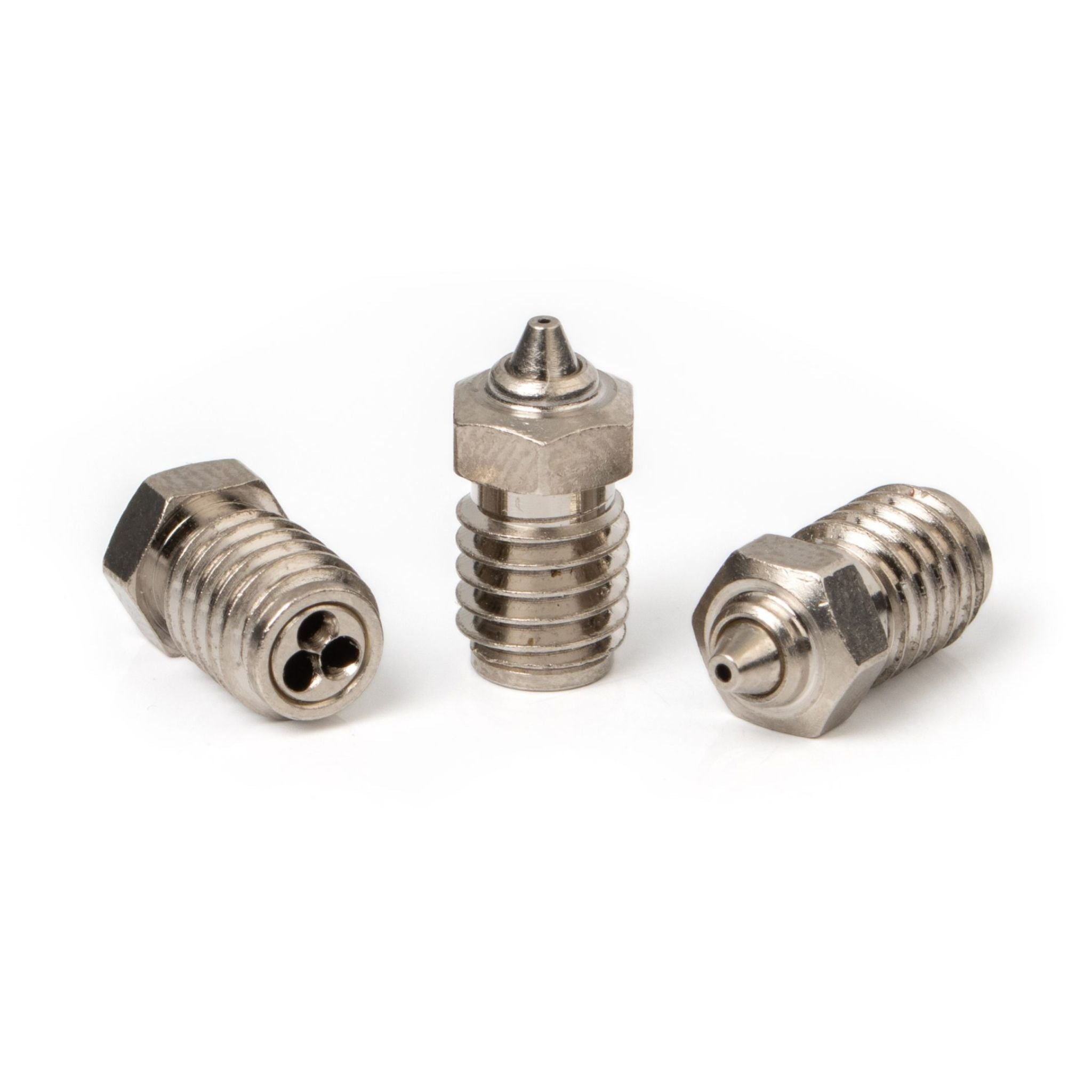
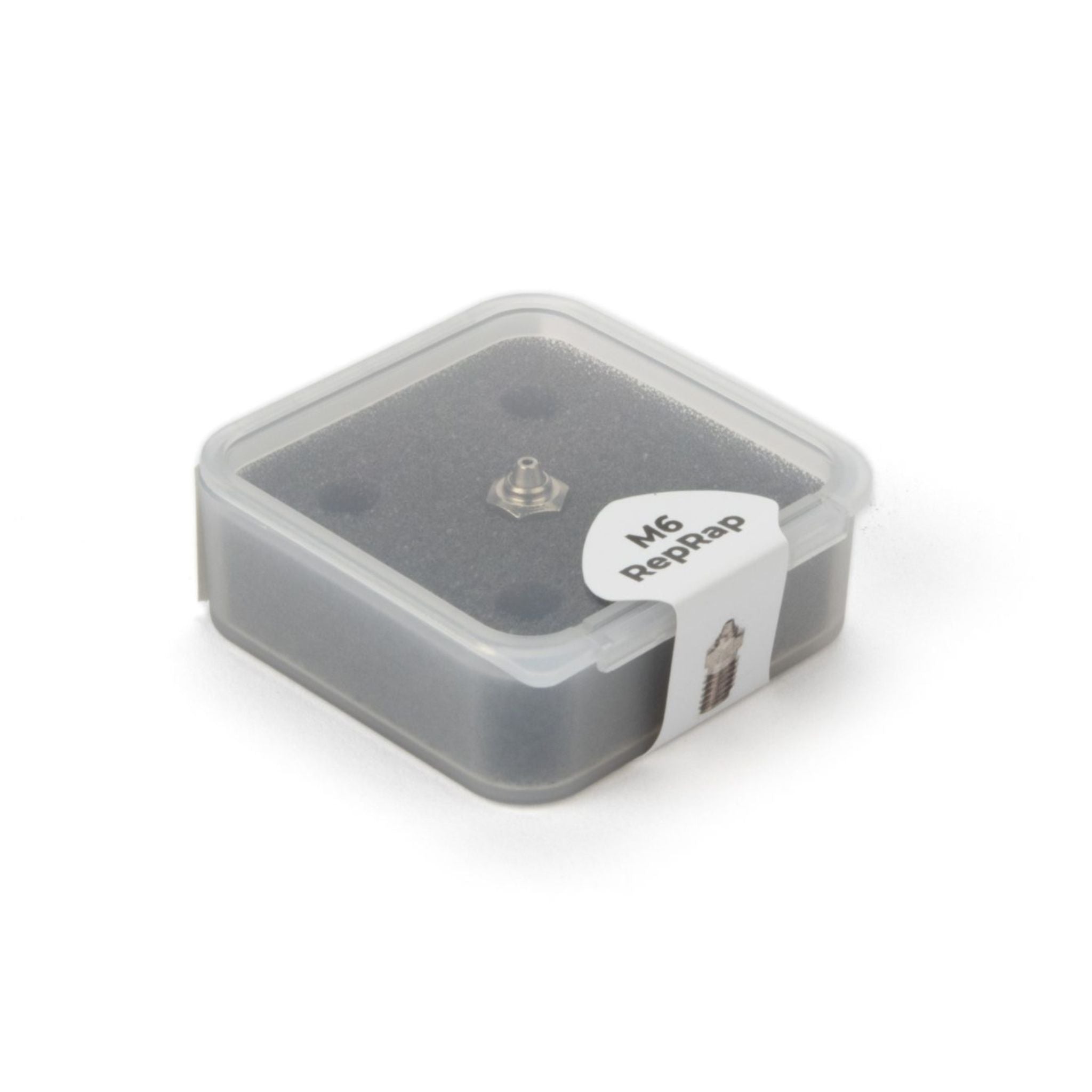
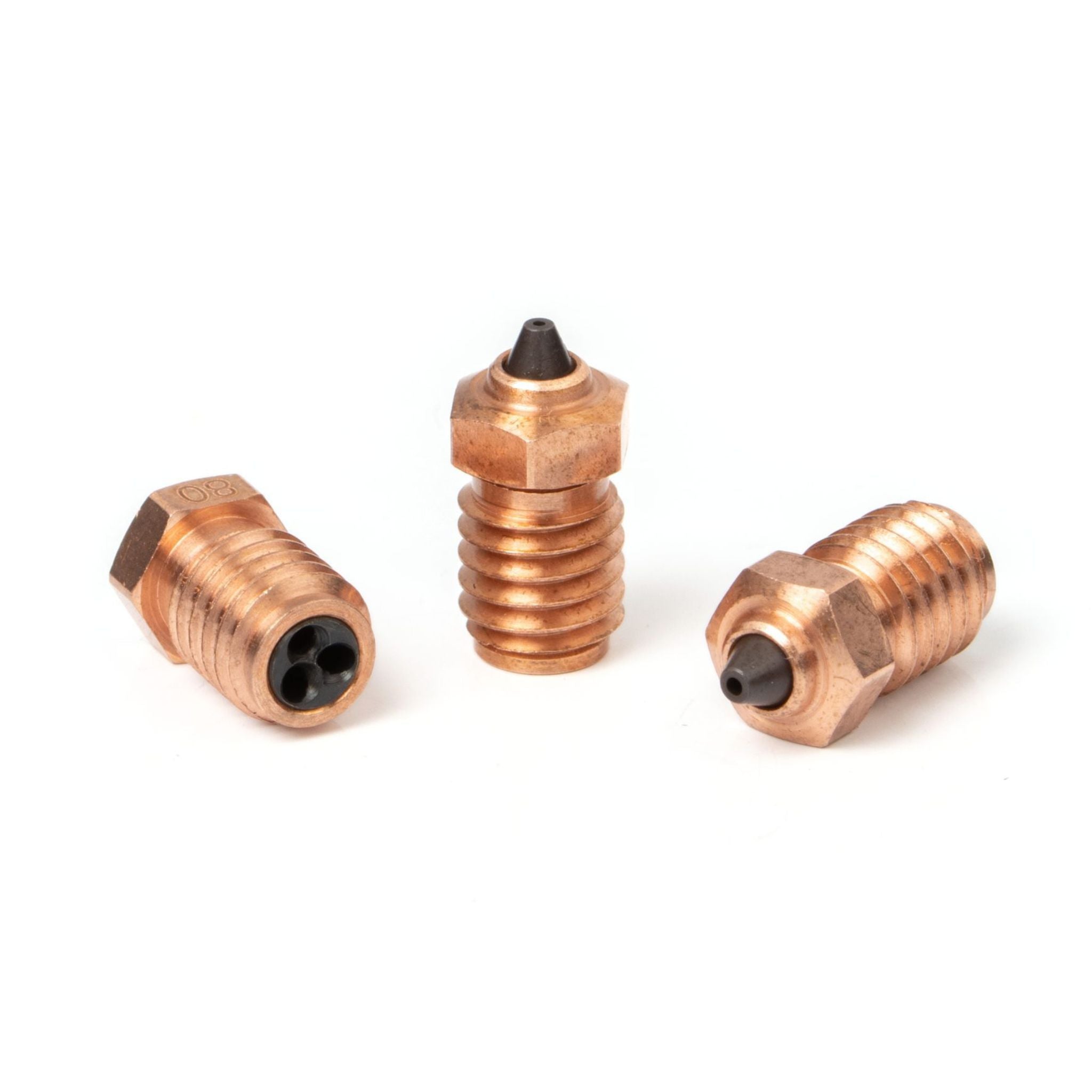
Bondtech CHT BiMetal Coated Brass Nozzle
 30-Day Performance Promise

Our Promise To You
If you're not seeing the results we've promised within 30 days, you can send the product back for a full refund, replacement, or repair. Exclusions apply. See terms for full details.
- Regular price
- $44.99
- Sale price
- $44.99
- Unit price
- per
 Free Returns & Shipping (Over $50)
 30-Day Money Back Guarantee
Free shipping over $50 is available for US customers only. See terms for full details.


Main Bondtech CHT BiMetal Coated Nozzle Advantages
- Abrasive-proof to work with carbon and glass fiber composite materials
- Higher melt capacity from increasing the surface area of the heating walls
- Flow rate gains between 25% and 65%*
- Competitive price/performance price
- Machined with ultra-precision
- Copper body and hardened vanadium steel inserts
- Nickel coated surface
- May be used with 1.75 or 2.85 mm hotends
*Flow Rate gains may vary. Results depend on the hardware, materials, and print settings used.
Advantages of the Nickel Coating
A Nickel coating is applied to these nozzles to provide protection against corrosion, erosion, and abrasion. Nickel-coated nozzles have more corrosion resistance and a lower coefficient of friction which allows slicker feeding of material and delays plastic adhesion to the nozzle's surface.
Our Mako™ Hotend is only compatible with nozzles using the FIN Standard (which will be available with CHT Nozzles soon).
Free shipping over $100 is available for US customers only. See terms for full details.
Technical Specifications
| Style | Dimensions (mm) |
| RepRap | M6×1×7.5×12.5 |
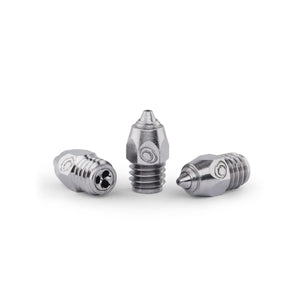
| MK8 | M6×1×5×13 |
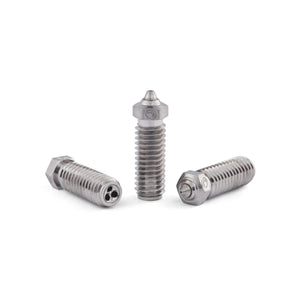
| Volcano | M6×1×14.5×21 |
Note: These nozzles are optimized for 1.75 mm filament, but are compatible with 2.85 mm hotends. To install/uninstall these nozzles, a 6 mm wrench is required.
Disclaimers
- The recommended torque for installing/uninstalling Bondtech CHT BiMetal Coated Nozzles is at most 1.5 Nm, making our 1.5 Nm Nozzle Torque Wrench the perfect tool for swapping these nozzles.
- Copper is a soft material and doesn't withstand high mechanical efforts.
- Before removing or tightening any Bondtech CHT nozzle, heat it up to 280°C, or at least above 250°C.
- Use only 0.6, 0.8 and 1.0 mm nozzle sizes for carbon or glass-fiber loaded abrasive filaments.
- For metal, wood, glitter, or other particle-loaded abrasive filaments, you should use a nozzle size of 0.4 mm or greater.
Note: If you plan on printing with different materials, we recommend that you use a different nozzle for each material. Using different materials with the same nozzle causes deposit build-ups inside the nozzle which will end up causing blockages.
